
-

-
 Right:ATP National Director Kaye Hewson
 -
 Teletrial specialties
 -
 Type of Sponsor for Teletrial


Nearly 90% of clinical trial sites in Australia are based in city areas, meaning anyone living outside of major metropolitan areas has to travel long distances to participate. But thanks to the Australian Teletrial Program, pathways and networks have been established around the country giving over 1,000 regional, rural, and remote patients the opportunity to take part in cutting-edge research from their community.
Australian Teletrial Program National Director Kaye Hewson says while the team is delighted to announce this milestone, the work happening in the background should not be underestimated. “This program is more than standard health change management, which in itself can be difficult, but this is a real health innovation that will transform outcomes for patients living in regional, rural and remote areas. The amount of work every participating jurisdiction has done locally must be acknowledged” she says.
The Australian Teletrial Program (ATP) is a health systems research project that aims to introduce and embed a new standard practice of healthcare to treat and manage diseases and conditions locally. It does this through Teletrial clusters, or a group of sites involved in the same research activity, consisting of a Primary Site which assumes overall responsibility, and one or more satellite sites.
“Across the program, there have been significant implementation challenges, from infrastructure to research culture variability across the six jurisdictions and everything in between” she says. “We may have initially underestimated that variability and how that would affect a national rollout, but now that we have established the infrastructure and workforce, we are able to harmonise existing and future policies, train and educate staff and start to really see capability and capacity being built at local sites with patient recruitment now underway”.
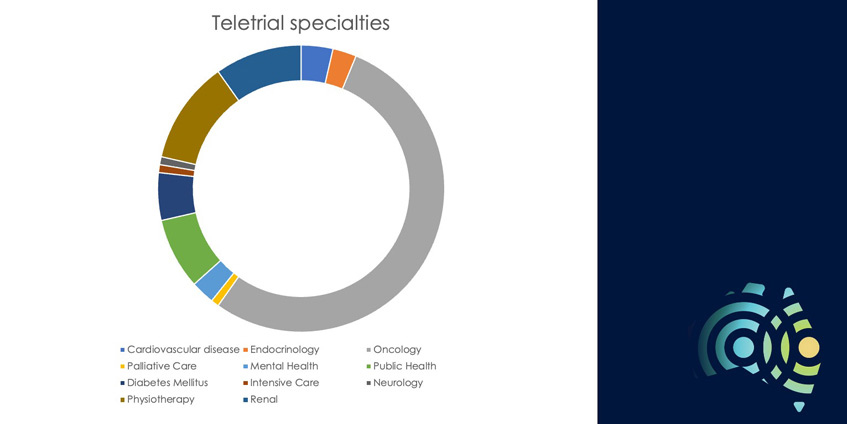
Teletrial clusters have been established across the country across all medical specialties. Since launching the Australian Teletrial Program has transcended out of oncology to other clinical specialities, including mental health, neurology, cardiology, diabetes and palliative care. And that, says Ms Hewson, will ultimately benefit patients and their health outcomes.
“The Teletrial pipeline continues to grow across each jurisdiction, and we have a number of Teletrials being worked on at varying stages of progress” she says. As those numbers grow, so do the opportunities for patients to take part.
For Teletrial Participant Stephanie Sando, who lives in Roma, over 1,000 kilometres away from the nearest city, having local access to clinical trials is a game-changer. Ms Sando is taking part in the global REIMAGINE 2 clinical trials, which are looking at the effect and safety of a potential new treatment for type 1 diabetes. The trials involve 2,700 patients, and she says had it not been offered locally, she would not have the time or money to take part.
Ms Sando says the trial is helping her learn to live with and manage her condition. The Teletrial also gives her access to the Diabetes Centre of Excellence in Logan (Logan Endocrine and Diabetes Services—LEADS) and Clinical Director Dr Gaurav Puri.
Dr Puri agrees Teletrials represent an opportunity to advance care and allows regional, rural and remote patients the chance to benefit from research.
He says Teletrials think beyond standard patient care, and as a passionate advocate for preventative health says they can help build an ecosystem of providing the best experience and care for patients, as well as clinicians.
Add new comment