
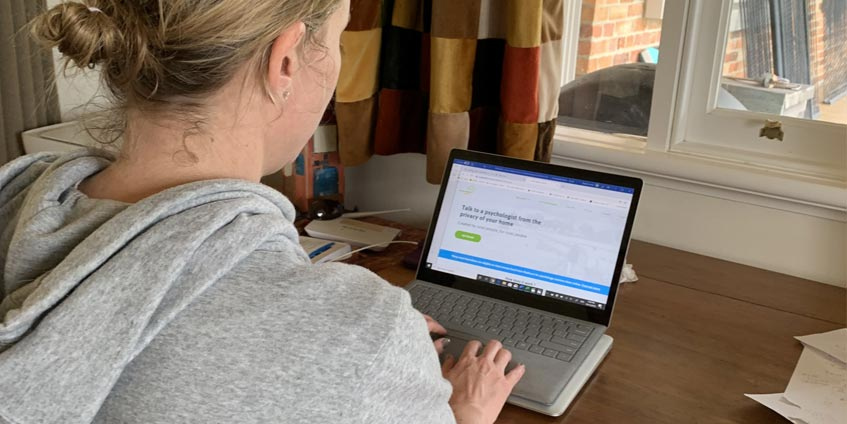


Women and families who have been impacted by stillbirth or miscarriage can now access bulk billed and low-cost support from trained psychologists via telehealth through a new program by Rural Health Connect.
The program is supported by the Federal Government over three years, with a particular focus on providing culturally safe engagement for populations identified as being most at risk of loss. The program supports anyone impacted by peri-natal lost recently or historically and includes family members.
All psychologists have undergone training in perinatal loss support, with additional training provided to ensure culturally safe support for populations found to be at higher risk of loss. These populations are; those living in rural and remote areas, First Nations women and families, migrant and refugee community members and those under 20 years of age.
Rural Health Connect Perinatal Clinical Advisor, Dr Renée Miller, who is also the co-founder and Principal Clinical Psychologist of The Perinatal Loss Centre said the grief associated with the loss of a baby is a unique and profound experience.
She said it is a time when bereaved parents can feel extremely vulnerable and alone. “Recognition of social and cultural complexities is important for psychologists working with families from different cultures and backgrounds."
“Compassionate support involves seeking to understand the individual’s experience of loss and their unique beliefs and backgrounds, while building a safe and secure therapeutic relationship to help bereaved parents process their grief within their communities."
“This process looks different for different people."
Dr Fatima El-Assaad experienced the loss of her baby girl, who was stillborn three years ago and hosts a podcast exploring lived experiences of pregnancy loss in culturally and faith-diverse communities, called the Still Nest Podcast. She said for women of the Islamic faith there may be cultural practices that it is important for psychologists to know, such as the need for burial within 24 hours of death and a traditional day grieving period.
“If psychologists know that quick burials are of importance to a grieving family, they can better understand how distressing this can be if the hospitals have delayed release of their baby.”
However, she stressed that every situation is different and everyone handles the grief in their own unique way.
“For me I guess it was important for the healthcare provider not to assume certain things about me because of the way I looked or dressed."
“Losing a baby is a life-altering experience and every touch point becomes so ingrained in the memory of the grieving parents that the ramifications of certain interactions can be ingrained in their memory for a lifetime.”
Psychologist, director of McNeair Aboriginal Psychological Services and AHRPA Board approved supervisor, Shannon McNeair; Malgana woman from Shark Bay WA said traditional practices for First Nations communities varied across Australia as well as communities and individuals.
“You need to ask the questions; you need to get comfortable with being uncomfortable. Sorry Time is about showing your respect, not saying anything but just sitting and allowing and understanding that someone’s going through a grief process and that is purely about being present."
Rural Health Connect director Megan Gomez said many psychologists who work in the area of perinatal loss support had put their hands up to be involved in the program because they recognised the need.
“People from these populations can face additional barriers to accessing help and this means they can slip through the cracks."
She said the use of telehealth for delivery of the support meant that it was available across rural Australia, even to the most remote areas.
“It also means that clients have access to a wide database of psychologists so that they can choose the practitioner that is right for them.”
“This is extremely important work and Rural Health Connect is very proud to be involved.”
Refer to Rural Health Connect with a mental health treatment plan via fax: 0745731100
Add new comment