
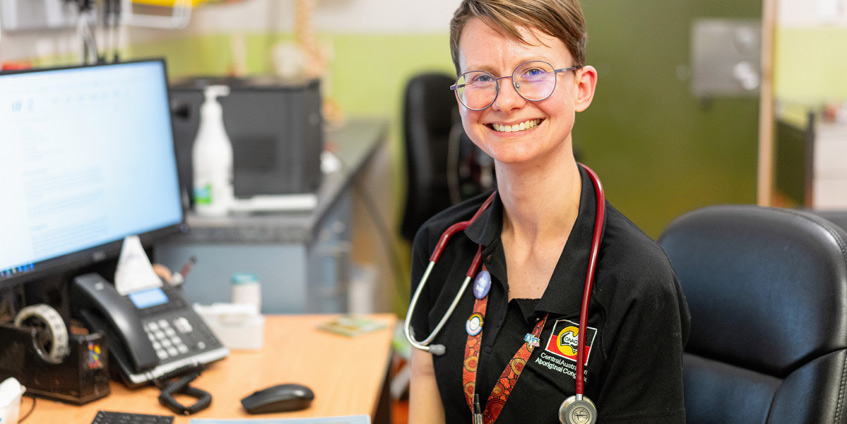
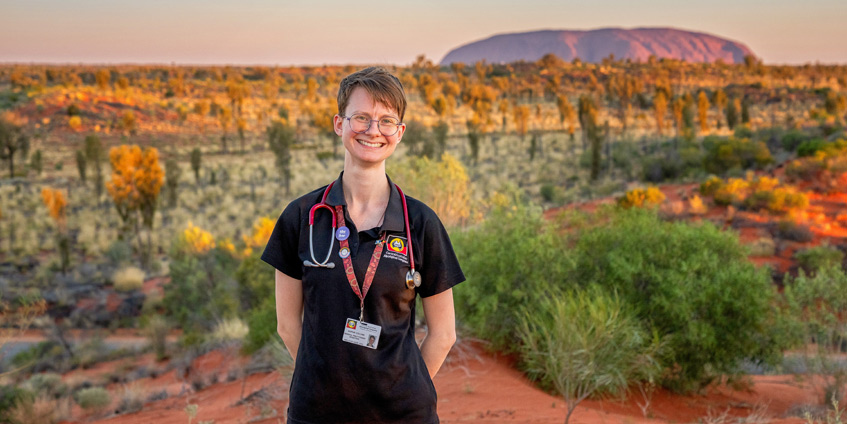


Dr Sophie Collins never imagined that her first visit to Mutitjulu at age 15 would shape her career in rural, remote, and First Nations healthcare. Now an ACRRM registrar, Sophie has returned to the community where her journey began.
Mutitjulu, located at the eastern end of Uluru, captured Sophie’s heart during a cultural exchange between her Sydney high school and the community. Immersed in the Pitjantjatjara language and cultural traditions, Sophie was struck by the contrast to her city life.
“It was my first time leaving the city,” she recalls. “Sitting around the fire, watching the women make damper and sharing stories—it was transformative.”
After high school, Sophie pursued medicine at the University of Newcastle, maintaining her connection to Mutitjulu. She undertook placements in Aboriginal community-controlled clinics in Newcastle and Darwin before deciding to intern at Alice Springs Hospital, the nearest hospital to Mutitjulu. In 2021, she joined ACRRM’s Rural Generalist Training Scheme (RGTS) as part of its first cohort. The program’s focus on community-driven healthcare and its flexibility, allowing Sophie to pursue advanced training in emergency medicine, appealed to her.
“I was constantly witnessing the end result of chronic diseases in the emergency department,” Sophie explains. “It underlined the importance of high-quality primary healthcare in remote communities.”
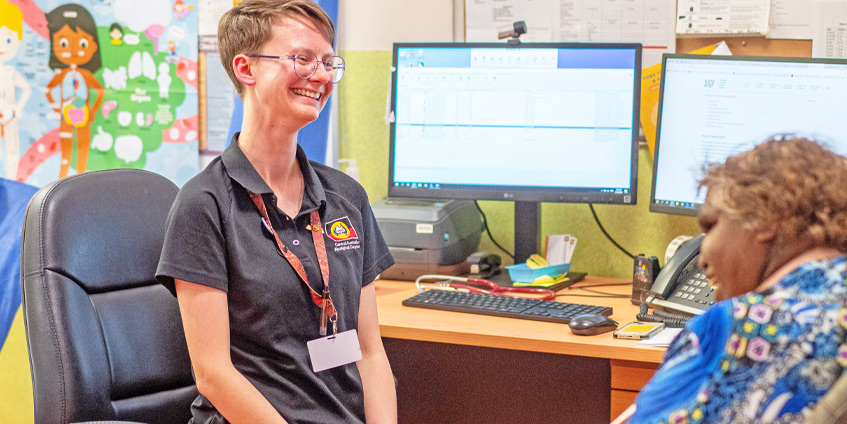
Working in Mutitjulu, a community of about 400 people, does come with challenges. Sophie lives in Yulara and drives 30 minutes through the Uluru-Kata Tjuta National Park - “the best commute in the world” - to the clinic, which is led by the Mutitjulu Health Service Board in partnership with the Central Australian Aboriginal Congress. She works with another doctor, nurses, and visiting allied health staff.
“It can be isolating at times,” Sophie admits, “but it's a great team at the clinic, and I'm well supported through the ACRRM remote supervision model. “I have regular online supervisor catch-ups and can call for advice when needed.”
Despite the challenges, Sophie finds satisfaction in building relationships within the community. The small, connected nature of Mutitjulu allows for more effective preventative care.
“One of the things I love most is that people can drop in without an appointment,” she says. “It’s all about understanding who’s connected to who, and creating trust.
“There is a lot of opportunistic care, where an Aunty might bring a niece, and we end up having a conversation about both their health concerns and needs.
“The slower pace in Mutitjulu allows for more meaningful interactions and I enjoy having a good yarn with the people who come to the clinic.”
Looking ahead, Sophie envisions integrating hospital-based care with community health work. She is proud of improving her Pitjantjatjara language skills, having recently attended a summer school led by Anangu tutors.
“It’s been a 14-year journey from my first visit to now,” she reflects. “I’m grateful ACRRM and Congress have made it possible for me to return and contribute to healthcare in this community. “It is amazing work, and I love it.”
Add new comment