
-
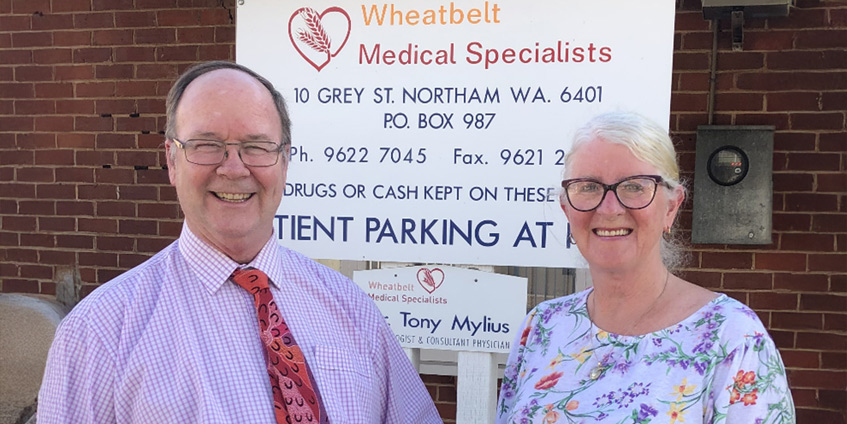 Dr Tony Mylius with Dianne Whitehall


Aortic stenosis is a serious condition in which the heart’s aortic valve becomes narrowed, restricting blood flow to the body. The 2021 report “Our Hidden Ageing: Time to Listen to the Heart” by the Baker Institute, suggested cases of aortic stenosis in Australia are increasing and predicted to reach over 260,000 by 2051.
People with aortic stenosis can develop symptoms such as shortness of breath, chest pain, or dizziness. These symptoms often take years to develop as the heart compensates for the narrowed valve by working harder. However, the heart will often eventually fail, resulting in symptoms. When this occurs, doctors recommend prompt replacement of the valve. In patients where symptoms have not yet developed, current guidelines suggest 6-12 monthly monitoring with heart scans called echocardiograms.
In recent years this watchful waiting approach has been questioned and some specialists believe it may be better to replace the valve earlier, before symptoms develop. However, there is little evidence currently to support this approach. To address this, the Australian government has funded a large-scale research study, the EASY-AS trial, currently recruiting patients in most Australian states and territories. EASY-AS is testing whether it is better to replace the aortic valve early before symptoms develop or wait and replace the valve only if and when symptoms occur.
EASY-AS is already the largest trial ever conducted addressing this question. In Australia, there are currently 20 sites recruiting patients. These are located in most capital cities and larger regional centres across the country, though due to the unique design of the trial, it is still possible for patients living in regional and rural areas to be involved. Patients can be referred to a trial site by their treating cardiologist. The trial site will look after all trial-related activities whilst the regular treating cardiologist retains long-term care of the patient.
Referrals from regional areas to metropolitan trial sites are commonplace in the trial. Dianne Whitehall, from regional Western Australia was diagnosed with severe aortic stenosis in 2021 by her local cardiologist, Dr Tony Mylius. “At my first consultation, Dr Mylius and I discussed the options for rectifying the issue and after a very comprehensive explanation of the EASY-AS trial we agreed that I would participate.”
Dr Mylius referred Dianne to Professor Graham Hillis at the EASY-AS site at Royal Perth Hospital. “After my consultation with Professor Hillis, I was placed into the EASY-AS trial and closely monitored for the next two years by the knowledgeable and friendly team.” Dianne eventually developed symptoms and underwent an aortic valve replacement.
“Being part of the trial required close communication with all professionals concerned and gave me peace of mind. The EASY-AS team at Royal Perth Hospital and Dr Mylius provided exceptional care during the trial and ongoing support since the surgery.”
EASY-AS works well for regional patients as most trial commitments can be performed remotely via video or telephone calls. Travel for the aortic valve replacement procedure is still required, however most patients with severe aortic stenosis will eventually develop symptoms and be required to travel to have their valve replaced.
If you would like to find out more about EASY-AS, please send an email to [email protected].
Add new comment