
-
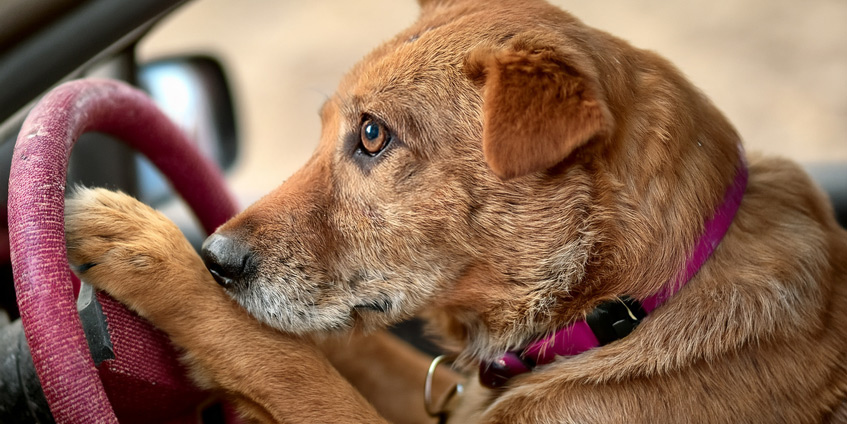
 Dog B demonstrating his collar and attached GPS tracker.
 -


Dogs play a very important role in Aboriginal and Torres Strait Islander (respectfully hereafter, Indigenous) communities, encompassing companionship, enhancing owner health and wellbeing, protection, hunting, pest control, teaching children about responsibility, as well as cultural significance. Some communities have creation stories, dreaming knowledge, ceremonies, dances and songs about dogs. Despite the value of dogs, the remoteness of Indigenous communities combined with the social determinants of health has led to inequitable health outcomes for not just Indigenous individuals and communities but also for their non-human family members.
Animal Management in Rural and Remote Indigenous Communities (AMRRIC) is a national not-for-profit organisation that works with remote Indigenous communities to improve the health of their companion animals (predominantly dogs and cats), which contributes to improving the health of the broader community. AMRRIC adopts a multi-disciplinary One Health approach, which considers the interconnection between the health of animals, people and the environment.
Education and training are essential strategies for building local capacity and overcoming challenges associated with geographical isolation, thus empowering communities with knowledge to make their own decisions and lead local efforts to address health issues at the human-animal-environmental interface. Improvements in companion animal management helps to create healthy animals and healthy proud communities. One of the cornerstones of AMRRIC’s approach is school and community education on companion animal health and management.
A recent school educational program illustrates how hands on involvement in STEAM (Science, Technology, Engineering, Arts and Mathematics) focused school education programs can be used to engage children in rural and remote communities, contribute to improving health outcomes, create curiosity and potentially spark an interest in exploring a science-based career.
This exciting program, at a remote school in the Top End of the Northern Territory, engaged the Grade 5/6 students in a STEAM focused educational program entitled The Secret Lives of Remote Dogs. Two community dogs were selected to have collars with GPS monitors attached so that they could be tracked over a 24-hour period. The students developed an appreciation of the scientific method, a deeper understanding of what motivates dogs to move around the community, and an understanding of community mapping. Before tagging the dogs, the students hypothesised where they thought the dogs would go and why, with most students suggesting that the dogs would likely spend most of their time at their homes and the school. Students were able to identify these structures on satellite maps.
The students were excited to hear the outcome of the tracking. Dog A spent most time at home and school, as predicted, and did not travel very quickly. The students predicted that Dog B wouldn’t travel far, as he was an old dog who spent a lot of his time at school. However, whilst he did not travel far during school time, after school he travelled quite far afield from his home and the school. The students conjectured that he may have been visiting family or friends in these areas. He also surprised the students by travelling at speeds up to 100 km/hour. When the students were asked whether it was possible for a dog to run that fast, they were able to deduce that he must have been travelling by car.
The Secret Lives of Remote Dogs program highlights the potential for contextually relevant educational programs focused on animal health and management to engage, excite and educate students.
Add new comment