
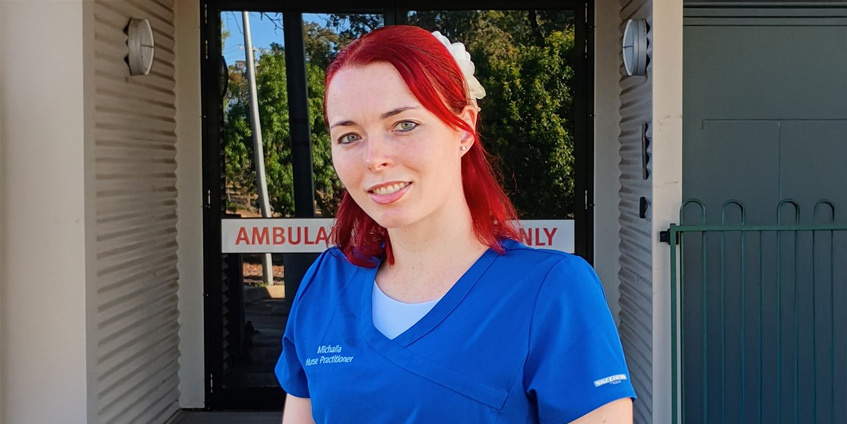


Michaila, a rural Queenslander, grew up rural with a medical condition requiring specialist care. Years of appointments and lengthy treatments in metropolitan hospitals burdened her family, with six-hour round trips for 20-minute specialist appointments simply part of their lives. These and other experiences grew her passion for rural health access and equity.
She became an ED clinical nurse in the town she grew up in and recently an endorsed nurse practitioner (NP; emergency and acute care). Serving her home community and growing professionally within her hospital is important to her. Her employment began in 2013 but, she first entered the hospital as a year 10 work-experience student in the ED: she knew immediately it was for her. Clinical placements there during her bachelors confirmed it further. Acceptance into a graduate nurse position in her hometown hospital was exciting, and she gained experience from highly skilled nurses, many home grown just like her. Since those early days, the hospital has grown to include services as renal dialysis, infusion and chemotherapy clinic, increased operating theatre services, telehealth clinics, public ultrasound, and there is more change to come.
Michaila is proud to have grown her career in her hometown. Working rural has never stopped her from gaining experience and seeking new knowledge and skills. She first gained her rural isolated practice (scheduled medicines) registered nurse endorsement (RIPRN) and other post-graduate training soon followed. The RIPRN allowed her some autonomy to conduct her own patient assessments and to develop her clinical judgement and advanced skills like suturing and back slabbing. Until recently the hospital doctor overnight was on-call only. With call-ins depriving the community of doctor the next day, she focussed on honing her assessment and clinical skills to minimise on-call usage and maintain service delivery. Over time Michaila realised that nurses could make a real difference in rural areas.
As the population of her town grew over time, presentations numbers during ED shifts increased and wait times intensified. Affordable general practitioner services in the town declined and ED patients began to apologise: “I don’t mean to be a burden… but I can’t get a GP appointment”. The hospital does its best to match staffing levels to activity levels, but the struggle remains constant. The perpetual staffing struggle made her want to do more to help the hospital and community. She knew of metropolitan fast-tracks and urgent care clinics trying to improve access to treatment for minor injuries and illnesses – clinics primarily staffed by nurses and NPs. The solution seemed simple. Michaila would combine her love of learning and autonomous practice, with her passion for rural healthcare access and equity: and, become a NP.
She completed her clinical time with NPs in the ED of a regional hospital and with doctors in her rural hospital. This hybridised training approach broadened her knowledge and skillset. She can now setup for a procedure and perform it—NPs provide the whole package—thereby reducing the workload of her medical and nursing colleagues. Her journey from work-experience student to student nurse, graduate registered nurse, clinical nurse, and nurse practitioner in her hometown brings her great pride. It is her dream to utilise her knowledge, skills, and broadened scope of practice to improve the emergent care access for her community; to inspire developing nurses to stay rural, and rural school students to pursue health careers.
Rural healthcare can be improved by growing rural workforces and by offering them training opportunities, supportive learning environments, and career advancement pathways to nurture job satisfaction. Michaila, like many of her colleagues, is excited about contributing to rural healthcare and growing her local workforce.
Add new comment