
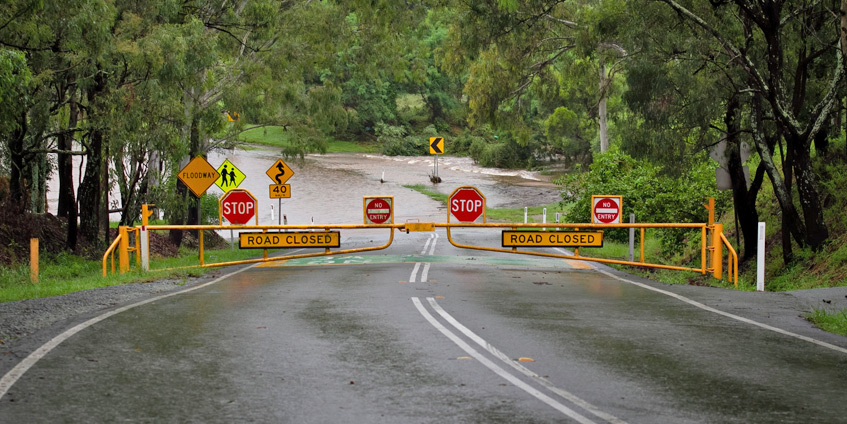




Over the past 50 years, the number of natural disasters has increased fivefold worldwide.1 In Australia, these disasters include bushfires, floods and cyclones, as well as gradual-onset and longer-term disasters, such as droughts and livestock diseases.
Dr Nicole Jeffery-Dawes, a Senior Psychologist at Bush Support Line supported her community through the large-scale flooding that rendered her town an island for months. Simultaneously she navigated the challenges of living through the floods herself. Meanwhile, her colleagues in southern regions were unexpectedly operating with a skeleton staff at a hospital, as several staff members had to leave to move their livestock away from an encroaching bushfire.
From Dr Jeffery-Dawes’ perspective, the impacts of these disasters on rural and remote health professionals are profound. Many professionals, whose homes may be directly threatened by events like fires or floods, are also part of agricultural families. For example, one of Dr Jeffery-Dawes’ colleagues, a psychologist, had spent her annual leave helping at her in-laws' sheep station during a severe drought, distributing feed to livestock and euthanising animals that could not be saved—an experience she described as "devastating."
Despite the personal toll these professionals face, they then turn up to work and, as a part of their role, listen to stories or help with injuries related to these events that have also directly impacted them. However, in their role as a health professional, they are unlikely to acknowledge their personal trauma.
These disastrous events continue to exacerbate the health inequities experienced by those living in rural and remote communities through indirect avenues such as structures unable to adapt when people need to leave work urgently. Or response plans and policies that are written in by people in capital cities and then (incorrectly) expect them to be implemented in rural and remote areas. These and other barriers can leave people feeling frustrated, helpless and alone.
So how can we supportively respond as colleagues and managers to these stressors? Dr Jeffery-Dawes suggests starting with acknowledgement and validation of their experiences. Just having an awareness of, and recognising their impact, can make people feel less isolated.
Support can also come in the form of listening if they wish to talk, or by providing practical support, such as dropping off a home cooked meal for the family, supporting their unanticipated request for time off, or willingly taking an extra shift at work so they can focus on what needs to be done outside of work.
Once the initial crisis is over, perhaps it might be suggesting external support resources they can access such as the free, 24/7 CRANAplus Bush Support Line (1800 805 391). Dr Jeffery-Dawes also encourages contract workers or those new to the area to be sure to familiarise themselves with the challenges a community has previously experienced or is currently facing and reflect on what skills they can bring during this time.
Ultimately, Dr Jeffery-Dawes emphasises that it is about showing compassion and empathy, and looking after one another. By offering practical support during a crisis and continued care in the long term, colleagues can help build both individual and community resilience. This, in turn, can address the health and wellbeing inequities experienced by rural and remote communities.
1 WMO Atlas of Mortality and Economic Losses from Weather, Climate and Water Extremes (1970–2019) (WMO-No. 1267) https://library.wmo.int/viewer/57564#page=1&viewer=picture&o=bookmarks&n=0&q=
2 Shirley A. Morrissey, Joseph P. Reser. (2007) Natural disasters, climate change and mental health considerations for rural Australia. Australian Journal of Rural Health. https://doi.org/10.1111/j.1440-1584.2007.00865.x
Add new comment