
-
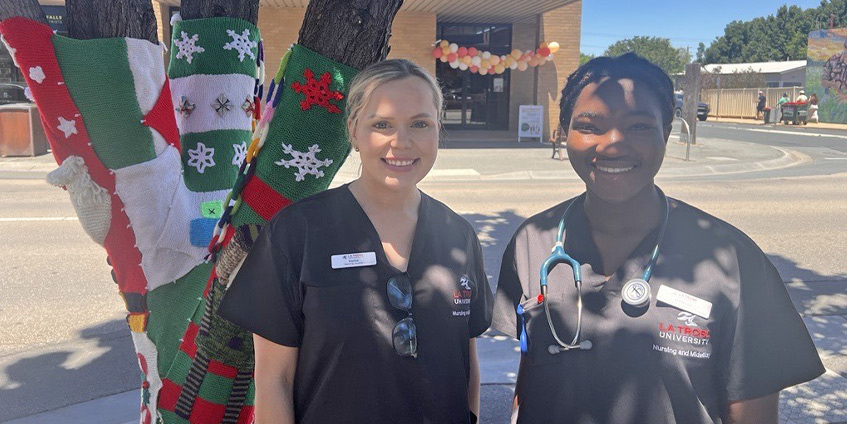 Hollie (left) and Vanessa.
 -
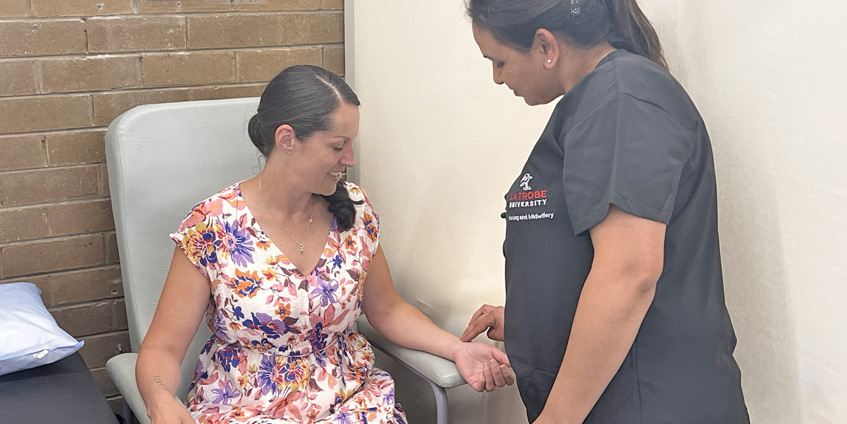 Cr Jesse Mitchell, Deputy Mayor getting a health check by a student.
 -
 First year placement students at the pop-up clinic.
 -
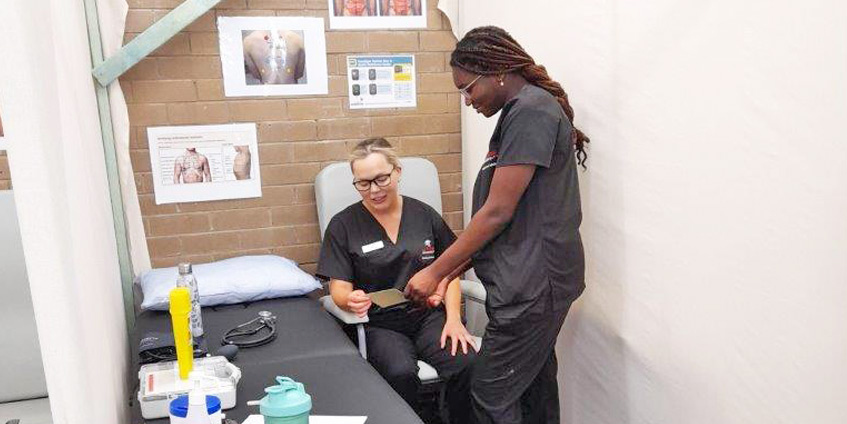 First year placement students at the pop-up clinic.
4x images provided. Pictured are Hollie (left) and Vanessa who are quoted in the article. The other two are first year placement students at the pop-up clinic but I don't have their names.


Driven by the need to increase rural placements for nursing students, the innovative program ‘Healthy Ky’ saw first-year students conduct around 1,300 health screenings over a three-week period in the heat of December, in Kyabram and surrounds in Victoria.
This initiative, a collaboration between La Trobe Rural Health School, Kyabram Community Learning Centre, and Kyabram District Health Service, also aimed to address significant healthcare barriers faced by residents in rural areas. But there were some unexpected gains too.
Healthcare Access: Overcoming Barriers with Immediate Care
In rural areas like Kyabram, where it can take up to two to three weeks to secure a doctor's appointment, residents often face significant challenges in accessing basic healthcare. For many, getting a doctor's appointment is “like winning the lottery,” as one local put it. In response to these barriers, the Healthy Ky project provided essential healthcare services on-site, offering immediate screenings for blood pressure and blood glucose levels.
By conducting these screenings, nursing students were able to meet the immediate healthcare needs of local residents, offering a much-needed alternative to long wait times. This project not only addressed the physical health concerns of the community but also helped alleviate the stress and isolation many feel while waiting for medical appointments.
Community Impact: Strengthening Connections and Building Trust
The Healthy Ky project fostered relationship building and a sense of trust and collaboration. Through students venturing out into the community and inviting people for a health check, they connected with locals in a way that strengthened their understanding of the unique needs and lived experience of rural folk.
Many residents, who would typically wait weeks for a doctor's appointment, were grateful for the chance to receive care quickly. One participant who had been advised to visit their GP after a screening returned the following week to share the good news—they were now receiving treatment for high blood pressure. This kind of feedback underscored the tangible impact the project had on individuals' health and highlighted the importance of maintaining an ongoing connection between rural communities and healthcare services.
As students gained confidence, they also gained unexpected connections with local businesses like the pharmacist who volunteered to come and speak to the students about how vital their presence is. These collaborations provided the students with broader insights into the fabric of rural life and the important role of various community sectors in maintaining health and well-being.
Educational Outcomes: Bridging Knowledge Gaps and Empowering Health Management
The Healthy Ky project was not just about improving healthcare access but also about educating both the students and the residents. For students, the hands-on experience of conducting screenings allowed them to practice their clinical and communication skills while interacting with people who face real-life health challenges. Many students reflected on how this experience broadened their understanding of rural healthcare.
Students like Hollie and Vanessa shared how the experience deepened their understanding of rural health issues. Hollie noted, "At first, I thought rural healthcare was just about overcoming access issues, but it's so much more — it's about understanding the unique challenges of small-town life and being able to support people in a way that's both personal and impactful." Vanessa added, "Being here has completely shifted my perspective. I've come to realise how vital outreach efforts like this are for connecting with people who might otherwise not seek help."
For residents, the project helped bridge knowledge gaps by empowering them with important information about managing their health. The screenings provided an opportunity for locals to learn about their health status and gain valuable advice on steps they could take to improve their well-being. This educational exchange not only contributed to better health outcomes but also encouraged more proactive healthcare management within the community.
By giving students real-world experience in communities like Kyabram—particularly to those who live within 50km—the likelihood that they will choose to work in such rural areas increases. A rich community experience can make all the difference for a student when deciding where they want to work after graduation. Exposure to the unique challenges and rewards of rural healthcare not only enhances the students' learning experience but also encourages them to consider bringing their skills and knowledge back to these communities when they enter the workforce.
Equity and Support for Vulnerable Populations
The Healthy Ky initiative also had a significant impact on vulnerable populations, including those experiencing homelessness, mental health struggles, and other complex health conditions. For individuals facing multiple social challenges, such as housing or employment insecurity, accessing healthcare services can be even more difficult.
Through the screenings, students interacted with residents who might not have otherwise sought help due to these barriers. This project not only provided essential health checks but also allowed students to connect with these individuals in a supportive and non-judgmental environment, offering a space where vulnerable people could receive care and advice tailored to their specific needs.
The program's inclusive approach meant that underserved groups, such as people with mental health challenges, were not left behind. By engaging with people facing a range of social and health issues, students were able to gain a deeper understanding of the complexities of rural healthcare and develop the skills needed to support these populations in the future.
Conclusion: A Model for Rural Health Improvement
The Healthy Ky project has proven to be more than just a health screening initiative; it represents a vital model for improving healthcare access and promoting well-being in rural communities. By offering immediate care, strengthening ties between healthcare providers and rural residents, and providing educational opportunities for both students and locals, the project has made a lasting impact on the health and lives of many.
For the students, this experience has been transformative, helping them build clinical competence and develop a deeper understanding of rural health needs. For the community, the project has provided essential healthcare services and strengthened the trust between residents and healthcare providers. Moving forward, locals hope to see these kinds of outreach efforts continue, ensuring that healthcare remains accessible and equitable for all.
Add new comment