
-
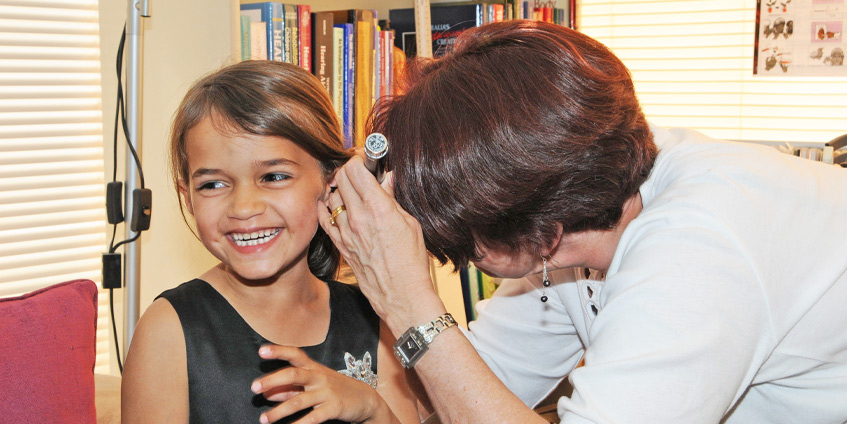 Dee otoscopy.
 -
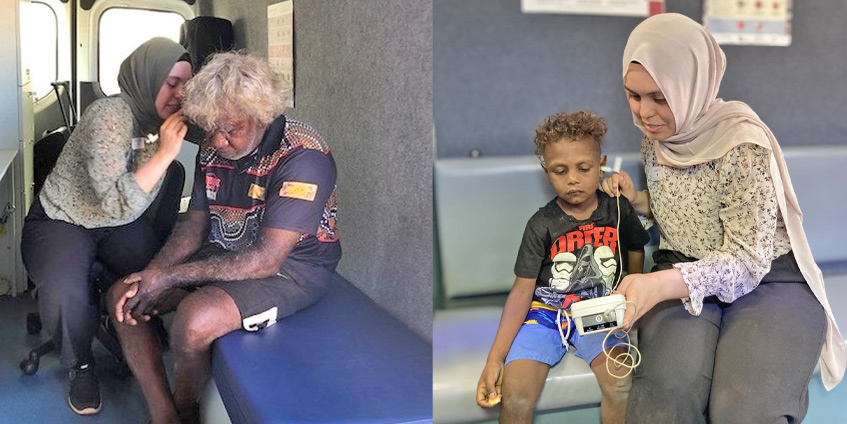 Left: Elder ear check in Newman. Right: Young adolescent with otoscope.
 -
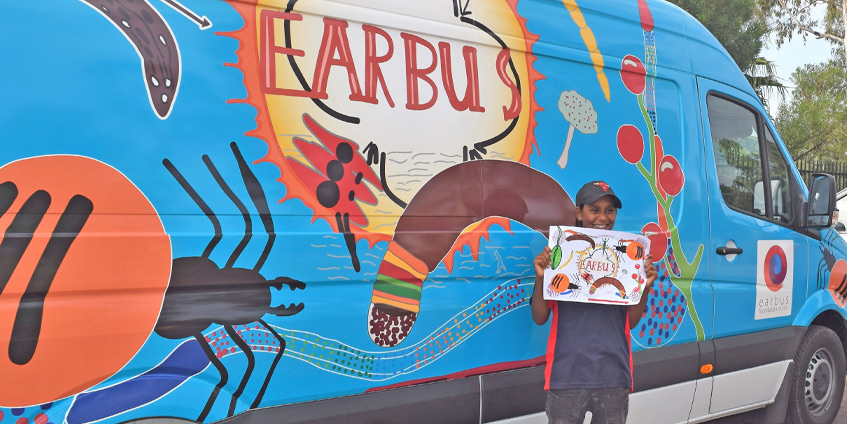 Artist Fabian with original Goldfields bus art.
 -
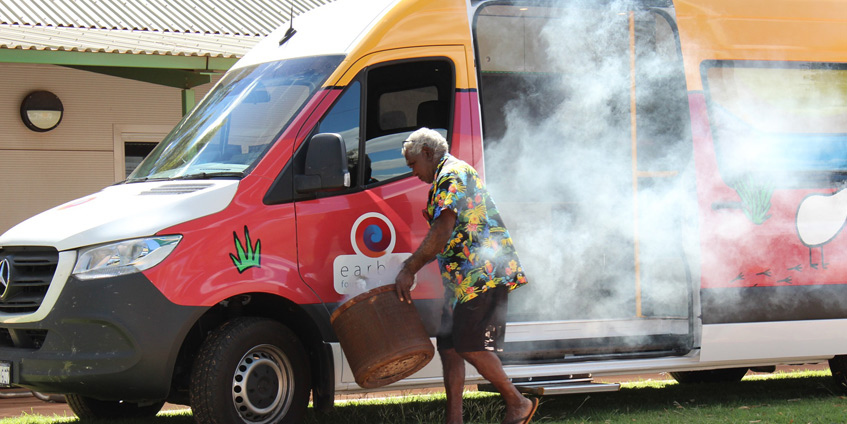 Pilbara Central smoking ceremony.
 -
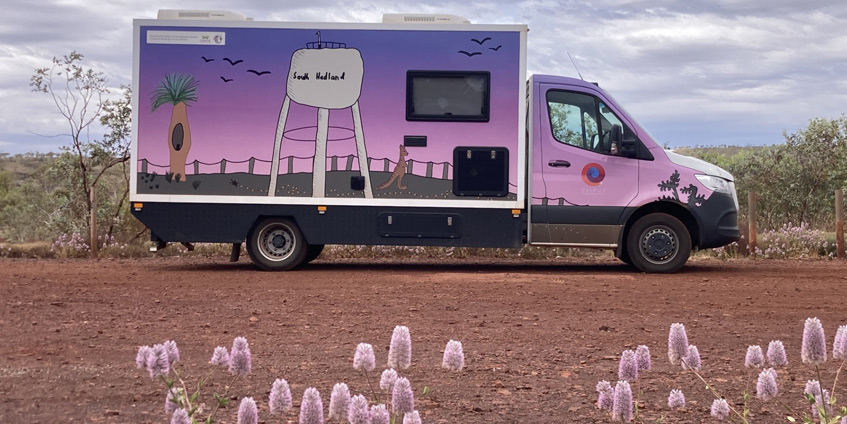 PLB Earbus with wildflowers.
 -
 York-Williams road.



For many children in rural and remote Australia, the sounds of the world around them—birds in trees, teacher’s voice in the classroom or laughter of friends—are not always hearable. Ear disease and hearing loss are disproportionately high among Aboriginal and Torres Strait Islander children, particularly in remote communities. This preventable hearing loss has far-reaching - potentially lifelong - impacts on brain development, education, employment and self-esteem.
Earbus Foundation of Western Australia (Earbus) addresses this urgent issue through a community-led, culturally safe model that ensures children in rural areas receive the ear and hearing health care they need to thrive. By tackling a key social determinant of health—access to quality healthcare—the Foundation is breaking down barriers and creating brighter futures for children across WA.
Ear disease and hearing loss has been labelled “the missing piece of the jigsaw” in the well-being of Aboriginal people. Education, employment and social inclusion are all affected by the ability to hear and communicate effectively. In remote communities, where healthcare services are often scarce, children with untreated ear infections can face lifelong struggles with literacy, reduced employment opportunities and mental health.
Aboriginal children experience rates of chronic ear disease that are among the highest in the world. The condition often begins in infancy and, without timely intervention, can lead to permanent hearing loss. This not only affects their ability to learn but also their confidence, cultural participation and future prospects.
Reduced access to health services is a powerful determinant of health outcomes. Earbus has developed a mobile, community-based approach to providing ear health care that is co-designed by Aboriginal people for Aboriginal communities. The Foundation’s teams travel to remote schools, daycares, kindergartens, playgroups and early learning centres, working in collaboration with Aboriginal Medical Services and local allied health agencies to deliver specialist hearing health services directly to children who need them most.
Earbus teams include nurses, doctors or nurse practitioners, audiologists and ENT specialists. This one-stop shop approach ensures children receive comprehensive, culturally appropriate care in safe and supportive environments. Earbus adapts to each local community, respecting cultural practices and engaging families directly, which helps build trust and encourage long-term health improvements.
One of the biggest challenges rural communities face is transport. Getting to and from health services can be difficult and costly, particularly for families in remote areas. The Earbus model eliminates this barrier by bringing healthcare to the community, ensuring children receive regular check-ups, early intervention and treatment without the need for long-distance travel. In short, we go where the kids are!
Education is another key pillar of the Earbus program. By working with teachers, parents and community leaders, Earbus raises awareness about the importance of ear health and equips local communities with the knowledge to prevent and manage ear disease. In doing so, the program fosters a proactive, rather than reactive, approach to hearing health.
The impact of Earbus Foundation’s work is profound. Children who might otherwise struggle with speech and literacy due to hearing loss are given the chance to engage fully in their education. Parents and teachers report significant improvements in children’s confidence, behaviour and ability to learn. Over time, these benefits extend beyond the classroom, enhancing employment prospects and social inclusion through to adulthood.
Hearing is fundamental to communication, connection and social participation. By addressing ear disease in rural and remote communities, Earbus Foundation is not just improving health outcomes, it is breaking the cycle of disadvantage and giving children the best possible start in life. Earbus is proof that innovative, co-designed solutions can bridge the healthcare divide and create measurable change for Australia’s neediest children.
Add new comment